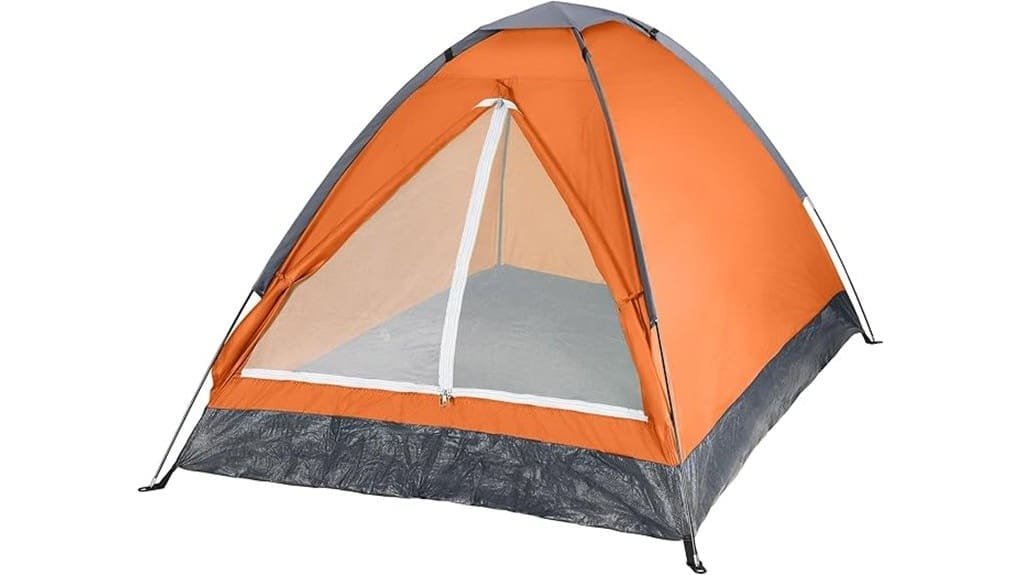
You’ll find the Wakeman Outdoors 2‑person tent is a budget-friendly, easy-to-pitch shelter that’s roomy enough for two and light enough to carry to the beach or a short trail. It uses 190T polyester, fiberglass poles, and a removable rainfly—so it handles fair weather and brief showers but won’t hold up to sustained storms. Venting and setup are straightforward, though seams and poles are modest; keep expectations realistic and check the rest of the review for setup tips and alternatives.
Some Key Takeaways
- Budget-friendly, roomy two-person tent ideal for casual backpacking, car camping, and beach trips.
- Easy sub-five-minute pitch using pole sleeves and clips, with basic stake-and-guylines stability.
- Made of 190T polyester with fiberglass poles; suitable for 3-season use but not heavy weather.
- Removable rainfly and dual vents give decent airflow; expect some condensation and flapping in wind.
- Recommend seam re-taping and careful pole/stake care; consider higher-denier or silicone nylon alternatives for durability.
Quick Verdict : Is the Wakeman Outdoors 2 Person Tent Worth Buying?
While it won’t impress ultralight hikers, the Wakeman Outdoors 2‑person tent delivers solid value for casual backpacking and car camping. You’ll find a dependable shelter that’s easy to pitch, roomy enough for two, and light on your wallet — a clear budget choice if you want functional gear without frills. In a quick comparison to pricier models, it trades premium materials for simplicity: polyester fabric, fiberglass poles, basic ventilation and a removable rainfly. You’ll feel part of the outdoor community using reliable, straightforward equipment that gets you out there without breaking the bank. It’s well suited for seaside trips where compact, purpose-driven beach camping gear makes coastal adventures easier.
What You Get in the Box and Key Specs (Weight, Dimensions, Materials)
Toss the carry bag aside and you’ll find everything you need for a quick two‑person shelter: the dome body, removable rainfly, two 3 mm fiberglass poles, four stakes, four guylines, and a small interior pocket — all packed into a 23″ x 4″ bag. Your packing checklist is simple and honest. Specs: 77″ x 57″ x 40″, floor ~30.5 sq ft, listed weight ~2.75–3.4 lbs (trail weight 3 lbs). Fabric is 190T polyester; poles fiberglass; stakes mixed steel/aluminum/plastic. Note material durability is adequate for 3‑season use. Check care instructions: hand wash only. Stake pattern supports basic stability. Lightweight beach carts can help transport camping gear more easily to shorelines and other outdoor spots, making it simpler to move tents and supplies in one trip with a beach cart.
Setup, Ventilation, and Weather Performance in Real Use
Because the pole sleeves and clip attachments are straightforward, you’ll have the Wakeman pitched in under five minutes once you’ve practiced, even in a breeze. You’ll notice pole durability is modest—fiberglass feels light and bendable, so stake and guyline placement matters. The dual-layer door and vent window give decent airflow; ventilation noise from flapping can appear in wind, so tension the rainfly. Condensation control is fair for a 3-season tent: open vents reduce buildup but won’t eliminate it in cold, humid nights. Rainproof seams held through showers when properly staked; re-taping would boost long-term confidence. This model is a practical choice for beach and shoreline trips thanks to its lightweight design and focus on sun, sand, and shelter.
Who This Tent Is Best For (Backpackers, Casual Campers, Festival-Goers, Kids)
If you liked the quick setup and decent ventilation described above, here’s who will get the most out of this lightweight two-person dome. You’ll appreciate it if you’re an overnight hiker who values low pack weight and simple pitching; it’s not ultralight, but it’s practical for short treks. Casual campers will enjoy the roomy floor and straightforward care for weekend trips. Festival-goers will find it among festival essentials—easy to carry and fast to stake down between sets. Parents will like it for kid playtime and backyard sleepovers. Urban lightweight commuters might also stash it for impromptu outdoor escapes. It’s also a great match for those who frequently transport gear to the shore using foldable beach carts, as the tent’s compact size and weight make it easy to load and haul.
Pros, Cons, and Alternatives to Consider Before You Buy
While it’s affordable and light enough for short treks, you should weigh a few trade-offs before buying: the Wakeman Outdoors tent gives you quick setup, decent ventilation, and a compact pack size, but its 190T polyester fabric and 3 mm fiberglass poles aren’t built for sustained heavy weather or heavy-duty use. You’ll like the price comparison vs. pricier ultralight models and the packing efficiency for weekend trips. Still, durability concerns and limited waterproofing mean you should have backup shelter for heavy storms. If you want better longevity or material sustainability, consider higher-denier polyester or silicone-treated nylon alternatives. For beach use, also consider features like sand-resistant floor designs and UV protection to improve comfort and longevity, such as sand-resistant designs.
Some Questions Answered
Does the Tent Include a Footprint or Is One Required Separately?
No, it doesn’t include a footprint — you’ll want one separately for ground protection. You’ll appreciate adding a footprint to protect the 190T polyester floor from abrasion and moisture. When choosing, factor sizing considerations: match the tent’s 77″ x 57″ floor or trim slightly smaller to avoid water pooling. You’ll extend tent life, reduce repairs, and feel confident sharing gear advice with fellow campers who value practical, reliable setups.
Can the Rainfly Be Used Alone for Shade or Shelter?
Yes — you can use the rainfly alone as a sunshade setup or minimalist shelter. You’ll get basic overhead protection from sun and light rain, though coverage is limited by the fly’s size and attachment points. Expect reduced wind resistance and less secure anchoring versus a full tent. You’ll appreciate the lightweight simplicity on day trips and festivals, and it helps you feel part of a pragmatic, outdoorsy group seeking flexible gear.
Is the Tent Compatible With Sleeping Pads Wider Than 25 Inches?
Yes — you can fit wide pads up to about 30 inches across if you’re okay with tight side clearance. The tent’s 57-inch width lets you use wide pads side-by-side or one wider pad with floor protection for seams and zippers. You’ll lose some storage room and need careful placement of gear, but you’ll sleep comfortably together. Bring a thin footprint or tarp to protect the polyester floor and extend pad life.
Are Replacement Poles, Stakes, or Rainfly Available From the Manufacturer?
Yes — you can get replacement parts, but options are limited. Contact customer support for poles, stakes or a rainfly; they’ll confirm warranty coverage and any retail availability. If warranty’s expired, they’ll usually point you to approved retailers or generic replacements that fit the 3 mm fiberglass poles and standard stakes. You’ll feel supported — the team’s practical, gear-focused help keeps you camping with confidence and community.
Does the Tent Come Pre-Treated for UV or Require Additional Coating?
No, it isn’t advertised as UV treated, so you’ll want coating required for long-term sun protection. You’ll get basic UV resistance from the 190T polyester, but fabric longevity will improve with a UV-specific spray or seam sealant. Treating it extends color and strength, protects seams, and keeps you confident on sunny trips. Join other gearheads who re-treat tents before heavy sun use for reliable protection and peace of mind.