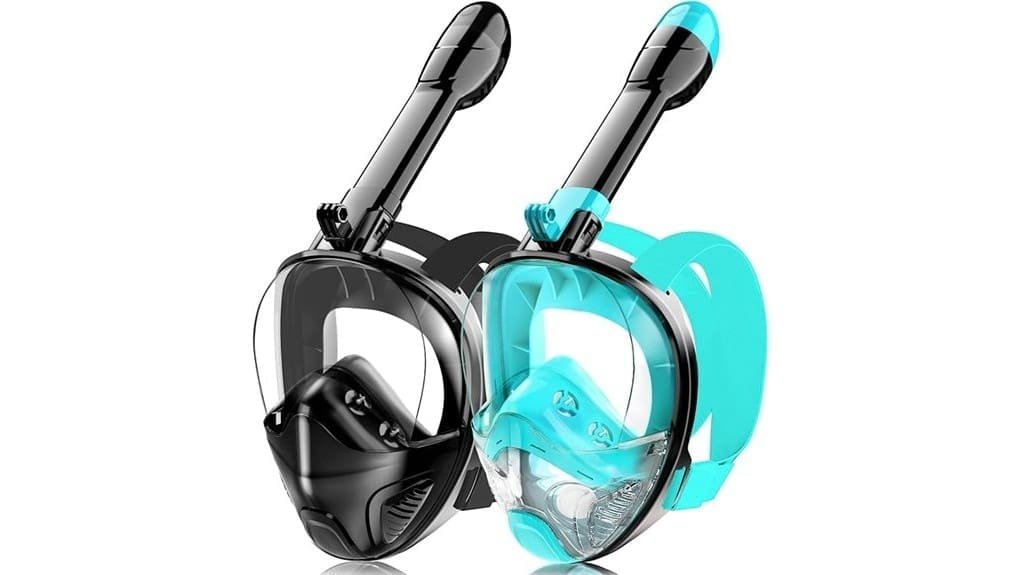
You’ll find this full‑face snorkel mask gives you easier breathing, a wide 180° view, and better leak control than many traditional masks when sized and fitted correctly. Dual float valves and inhale‑only airflow cut water ingress and breathing effort, while separate exhale chambers reduce CO2 buildup and fog. Silicone skirt and drainage lower leaks, though facial hair or wrong size can spoil the seal. It’s great for teens and casual adults—keep going to see fit tips and safety details.
Some Key Takeaways
- Full-face snorkel masks offer a 180° panoramic view and integrated snorkel for comfortable, easy snorkeling for teens and adults.
- Anti-fog chamber and flat lens isolate exhaled air, slowing fog buildup and clearing faster than basic masks.
- Dual float-ball valve and inhale-only pathway reduce water ingress and breathing effort, improving safety in calm conditions.
- Proper sizing (nose bridge to chin: <4.7" = S/M, >4.7″ = L/XL), strap adjustment, and trimming facial hair are essential for a reliable seal.
- Best for shallow reefs, calm bays, beginners, and family outings; avoid for diving-grade performance or poor-fitting situations.
How This Full Face Snorkel Mask Works and Who It’s Best For
Because the mask separates inhaled and exhaled air and uses a dual float-ball snorkel, you’ll breathe more easily and stay drier than with a traditional tube mask. You get a clear, panoramic view and reduced fog because inhaled air stays isolated from the lens, and silicone sealing cuts leaks. It’s ideal if you want confidence in shallow reefs, calm bays, or family outings — beginners and regulars fit in. Practical features include dry storage for small items and a removable camera mounting option so you capture group moments. Choose size by face measurement for comfort and reliable performance on every trip. Many beachgoers prefer full face masks for their panoramic view and comfortable fit.
Breathing and Safety Features Explained (Dual Float, Inhale‑Only, CO2 Control)
You’ve seen how the mask keeps your view clear and your face dry; now let’s look at how the breathing system keeps you safe and comfortable. The dual float valve uses gravity and buoyancy to seal the tube when waves hit, so water stays out. An inhale only pathway increases fresh air intake, reducing effort and anxiety compared with old-style snorkels. Inside, dedicated inhale and side exhale valves and chambers channel air to limit CO2 buildup, cutting dizziness risk. Practically, that means easier breathing, fewer interruptions, and shared confidence—so you and your group can relax and explore together. Choose a roomy, durable snorkel gear bag to store and protect your full face mask between trips.
Vision, Anti‑Fog, and Leak Protection in Real Use
When you plunge in, the mask’s flat, transparent lens and sealed silicone skirt deliver a wide, stable field of view with far less distortion than traditional curved masks, so you spot marine life sooner and keep your bearings longer. You’ll notice consistent lens clarity thanks to an interior air layer that isolates exhaled breath, cutting condensation. Compared to basic masks, fog develops slower and clears faster. The silicone wrap and snug seal reduce leaks; built‑in water drainage channels handle small ingresses without interrupting your swim. You’ll feel confident sharing tips with buddies and relying on predictable anti‑fog, anti‑leak performance. Many snorkelers also prefer full face designs because they integrate the snorkel and mask into one unit for easier use and comfort.
Sizing, Fit Tips, and How to Measure for S/M vs L/XL
Good fit matters as much as clear vision and a tight seal, so measure before you buy. You’ll measure from the bridge of your nose to the bottom of your chin: under 4.7 inches means S/M, over means L/XL. Compare sizes side-by-side if possible. Adjust head straps so the mask sits evenly without pressure points; tighten incrementally and test seal by inhaling gently. Account for facial hair considerations—beards and stubble can break the silicone seal, so trim or test different strap tensions. If you share the mask, label sizes and practice quick head strap adjustments for a consistent, confident fit. Also consider matching your mask to the correct snorkel fins for optimal comfort and performance, especially when planning extended beach sessions with snorkeling fins.
Verdict: Pros, Cons, and Whether to Buy for Adults or Teens
Although the full-face snorkel mask gives a huge improvement in comfort and field of view compared with traditional masks, it has trade-offs you should weigh: the 180° lens and anti-fog chamber make breathing and sight easier, while the dual float-ball and dedicated exhale valves lower leak and CO2 risks, but facial hair, sizing errors, or improper fit can still compromise the seal and safety. You’ll like roomy vision, integrated anti-fog, and simple fit guidance for S/M or L/XL. Compare price comparison data and user testimonials for durability, warranty, and support. Buy if you value comfort and group-friendly use; skip if you need diving-grade performance. Consider reviewing our Top Tips for choosing the perfect snorkel set before purchase.
Some Questions Answered
Can Children Under 12 Safely Use This Full Face Snorkel Mask?
No, you shouldn’t let children under 12 use it; manufacturers sized this for teens and adults, so child ergonomics and breath safety may be compromised. Compared to kid-specific masks, this one risks poor seal and improper airflow for smaller faces. If you want your child included, choose a mask designed for children with correct sizing and verified breath safety, or supervise closely and opt for age-appropriate gear to keep them safe and confident.
Is the Mask Compatible With Prescription Eyeglasses or Corrective Lenses?
No — the mask isn’t designed for prescription compatibility, so you won’t wear regular eyeglasses inside it; instead, you’ll rely on its vision accommodation features like the wide transparent flat lens. Practically, you can compare options: get custom prescription inserts from third-party vendors or use contact lenses. If you want full inclusion, check sizing and aftermarket corrective-lens adapters so you’ll snorkel comfortably with clear vision and confidence.
Can I Use the Mask While Scuba Diving or With Oxygen Tanks?
No — you shouldn’t use this full-face snorkel for scuba diving or with tanks. It’s designed for surface breathing; scuba incompatibility and oxygen risks make it unsafe underwater. Compared to a proper scuba regulator and mask, this snorkel can trap gases and doesn’t handle increased pressures or tank oxygen safely. Stay with snorkel use, join a dive course if you want tanks, and trust certified scuba gear for submerged breathing and safety.
How Do I Clean and Disinfect the Mask After Each Use?
Rinse cycle first: rinse inside and out with fresh water, shake out excess, then air-dry. For Disinfecting methods, soak in mild soapy water or a 1:10 bleach solution briefly, rinse thoroughly, or use alcohol wipes on mouthpiece and straps. Compare methods by frequency: soap daily, bleach weekly. Store dry away from sun. You’ll feel confident sharing gear; keep seals intact and contact customer support for warranty help if anything looks wrong.
Are Replacement Parts and Accessories Sold Separately?
Yes — replacement parts are sold separately, and you’ll find common pieces like valves, straps, and camera mounts available. You’ll want to check accessory compatibility before buying; some mounts or filters fit only specific models. Compare options by part number and material, and reach out to customer support if you’re unsure. You’ll feel supported knowing replacements and compatible accessories keep your mask reliable and shared among fellow snorkelers.