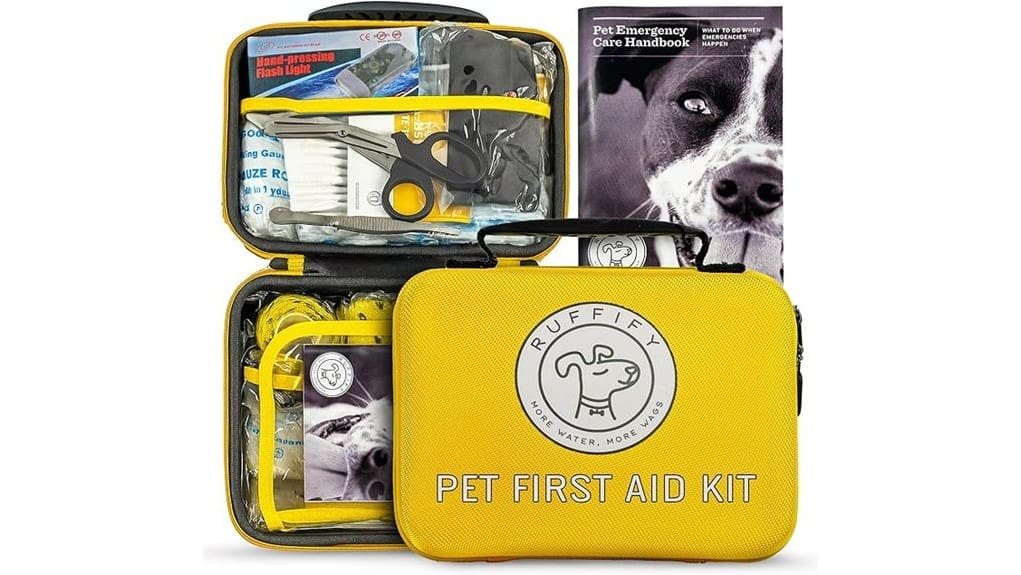
You need a compact, vet-approved dog first aid kit that cleans wounds, controls bleeding, stabilizes injuries, and gets your pet safely to care. Include sterile saline, antiseptic wipes and ointment, adhesive bandages and sterile gauze, a slip leash and blanket, tweezers, scissors, and a thermometer. Add lightweight hydration, reflective waterproof casing, and a simple checklist with pet info. Keep it accessible, restock regularly, and follow vet guidance — more practical steps and usage tips follow.
Some Key Takeaways
- Include sterile saline, antiseptic wipes/ointment, adhesive dressings, and sterile gauze for effective wound cleaning and coverage.
- Pack tweezers, scissors, thermometer, and a slip leash for precise assessment, wound care, and safe animal restraint.
- Choose a compact, bright, waterproof case with interior organization and reflective exterior for fast retrieval and protection.
- Add travel essentials: collapsible bowl, electrolyte packets, compact blanket, and sand-friendly items for beach or outdoor trips.
- Maintain monthly checks, replace used/expired items, and customize contents by pet size, health needs, and seasonal activities.
Primary Intent & Best Format: Quick Answer and Checklist for Dog First Aid Kits
Think of a dog first aid kit as your on-the-go emergency clinic: it’s meant to let you act quickly and confidently for minor wounds, paw injuries, temperature issues, and other small emergencies until you can reach a vet. You’ll want a compact, clearly organized kit that fits car, home, and travel use; bright, durable casing aids rapid retrieval. Include a simple checklist, pet instruction manual, and space for emergency communication info. Keep contents vet-approved and arranged for fast access. Schedule a training refresher with household members so everyone feels prepared, calm, and part of a capable caregiving team. For beach outings, also consider adding sun and saltcare items tailored to shoreline first aid needs.
10 Must-Have Items in a Vet-Approved Dog First Aid Kit (What Each Does)
Now that you know the kit’s purpose and ideal format, let’s look at the specific items you want on hand and what each one does. You’ll find sterile saline for wound irrigation, antiseptic wipes and ointment to prevent infection, and adhesive dressings plus sterile gauze for secure coverage. A slip leash and blanket stabilize and calm an injured animal. Tweezers, scissors, and a thermometer let you assess and treat injuries precisely. Paw bandages protect pads; instant cold packs reduce swelling. Pain management includes vet-approved oral analgesic guidance in the manual. The kit’s organization helps you act confidently as part of a caring community. For beach outings, pack the kit in a waterproof carrier to protect supplies from sand and moisture for safe outdoor adventures.
Compact Kit Essentials for Travel, Car, and Outdoor Adventures
A compact, well-organized first aid kit gives you the tools to respond quickly when your dog needs care on the road or in the backcountry. You’ll appreciate lightweight packaging that fits a glovebox, backpack, or saddlebag without bulk. The kit’s reflective, waterproof case makes it visible in low light; interior compartments keep essentials accessible and sterile. Include bandages, antiseptic wipes, a slip leash replacement, and clear pet instructions tailored to small animals. Pack a compact blanket and emergency hydration options like electrolyte packets and a collapsible bowl. This concise setup helps you act calmly, confidently, and together with other pet parents. Consider adding a compact sand-friendly mat to provide stable footing and keep wounds clean when treating your dog on sandy beaches or dunes.
How to Use Key Items: Slip Leash, Thermometer, Paw Bandage, and Wound Care
Having a compact kit at hand is one thing; knowing how to use its main tools is what keeps your pet safe when minutes matter. You’ll apply the slip leash technique by sliding the loop over the muzzle, positioning it high behind the ears, and tightening gently to control movement without choking. For thermometer placement, calm the dog, use lubrication, and insert rectally to the recommended depth; wait the full time for an accurate read. Clean and protect paw wounds with antiseptic, a dog paw bandage, and secure dressing. Stay calm, follow the manual, and seek vet care when unsure. Choose a waterproof first aid kit designed for beach and outdoor use to protect supplies from sand and water.
How to Choose and Maintain a Complete Kit: Packing, Storage, and Restocking Schedule
Regularly review what’s in your kit and tailor its contents to your pet’s size, health needs, and typical activities so you’re ready for likely emergencies. Choose a compact, vet-approved set that fits car, home, and travel; include the 27 essentials and the pet instruction manual. Store it in the bright, waterproof case where everyone can find it. Pack seasonal supplies (tick remover, cooling gel, extra paw bandages) as weather and activities change. Create a simple restocking routine: check monthly, replace used items, record expiration dates for medications and sterile supplies with expiration tracking, and update after trips or incidents. When heading to the shore, add beach-friendly items like sterile saline, tweezers, and a sand-safe wound cleanser to protect wounds from grit and bacteria.
Some Questions Answered
Can This Kit Treat Poisonous Ingestion or Envenomation?
No — you shouldn’t rely on this kit to treat poisonous ingestion or envenomation. The kit supports toxicology basics awareness and immediate first steps (containment, not inducing vomiting) but it doesn’t include emergency antidotes or advanced treatments. You’ll use it to stabilize, control bleeding, and follow the pet instruction manual while you contact a vet or poison control. You’ll feel supported and connected while getting professional care promptly.
Is Any Item in the Kit Unsafe for Cats or Other Small Pets?
No — nothing in the kit is inherently unsafe for cats or small pets when used correctly, but you should take precautions to avoid toxic reactions and cross contamination. You’ll follow the pet instruction manual, use species-appropriate dosages, and keep separate supplies for wounds or medications. You’ll also clean and replace items after use. If you’re ever unsure, contact your veterinarian immediately for tailored, safe guidance.
Are Medications Included or Should I Add Prescription Drugs?
No, prescription medications aren’t included — you should add any pet-specific drugs. You’ll handle prescription management by keeping doses, instructions, and vet contact info together. Use the kit’s waterproof, reflective case for secure medication storage and a labeled mini pouch for daily doses. You’ll stay organized, calm, and connected to your pet community when you bring prescriptions, clear instructions, and a checklist to every outing.
How Long Do Perishable Items Like Antiseptic Wipes Last?
Antiseptic wipes typically last 1–3 years; check expiration dates and replace accordingly. You’ll want to store them in cool, dry storage conditions away from direct sunlight and heat to preserve efficacy. If a wipe looks dried out, discolored, or has an off smell, discard it. Keeping them in the kit’s waterproof, reflective case helps maintain condition and gives you confidence that your supplies will perform when you and your pets need them.
Can Airlines or TSA Restrict Carrying This Kit on Flights?
Yes — airlines and TSA can restrict items, but you’ll usually be fine. Check airline policies and prepare for security screening: pack liquids under allowed limits, label medicines, and separate sharp items or large syringes. Keep the bright waterproof case accessible and carry the pet instruction manual to explain contents. You’ll feel included and calm when you follow rules, declare anything questioned, and confirm specific carrier rules before travel.