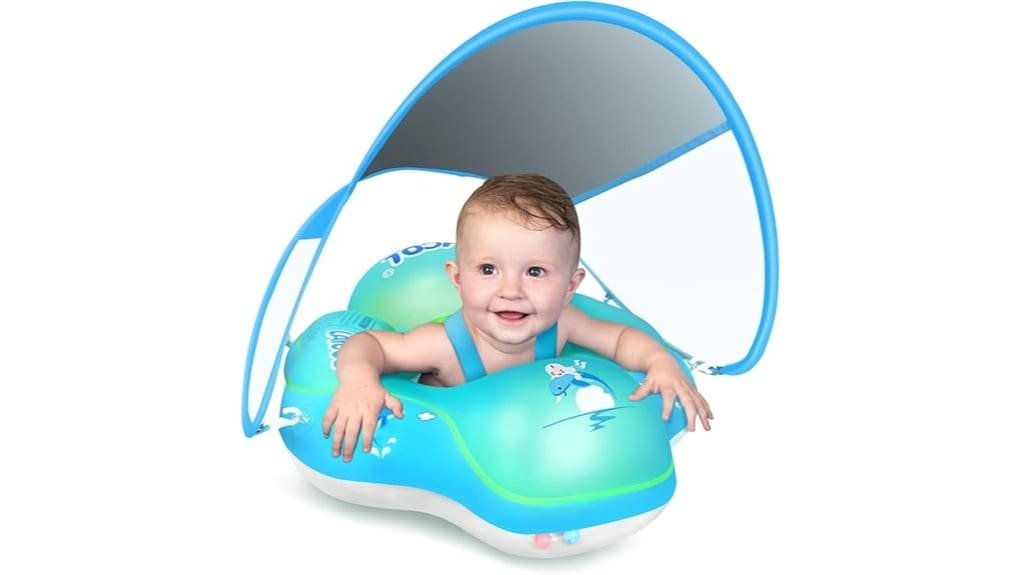
You’ll get a stable, safety-first baby float that keeps buoyancy if one chamber punctures, reduces forward tipping with a raised front and wide sides, and uses straps and a crotch support to stop slipping; materials meet CPC/CA65 notes, valves resist slow leaks, and the UPF50+ removable canopy shades while ventilating. It’s made for supervised gentle floating (3–36 months), inflates quickly, packs compactly, and you can keep reading to see full test details.
Some Key Takeaways
- Double-layered air chambers and raised front reduce overturn risk, maintaining buoyancy if one layer punctures.
- Shoulder strap, abdomen support, and crotch bottom keep infants securely seated, preventing sliding out.
- Two swim modes (reclined backstroke and upright breaststroke) offer guided, stable movement options.
- UPF50+ removable breathable canopy shades >98% UV while ventilating to prevent heat buildup.
- Not a substitute for hands-on supervision; intended for gentle floating under caregiver watch.
How This No-Flip Baby Pool Float Works and Who It’s For
Because safety comes first, this no-flip baby pool float combines a double-layered air chamber with a raised front, widened sides, shoulder strap, abdomen support and bottom crotch to keep infants stable and prevent forward overturning, flipping, or sliding out. You’ll see it supports two swim modes for varied movement while keeping posture secure; parents report reliable buoyancy and easy inflation. Use it for gentle floating games under constant parent supervision—never as a substitute for hands-on care. It’s suited to caregivers wanting inclusion: small infants to toddlers (3–36 months) who benefit from guided water introduction. Designed for beach and pool outings, these floats help make supervised water time fun and accessible for families with young children, promoting safe water play.
Safety Features Explained: Double Air Chamber, Raised Front, Straps, and Standards
When you pick up this no-flip baby pool float, you’ll notice its safety features are designed to work together to minimize common rollover and ejection risks: a double-layered air chamber maintains stable buoyancy even if one layer is punctured, the raised front and widened sides reduce forward tipping, and the shoulder strap, abdomen support and bottom crotch hold the child’s posture to prevent sliding out. You’ll appreciate compliance with CPC and CA65 standards, durable leak-resistant materials, and clear user guidance. Childproof locks on valves, a simple manual for correct buckling, and recommendations for emergency signaling create a shared safety practice among caregivers. Many parents also find the float’s bright, durable design ideal for beach outings.
Sun Protection, Materials, and Build Quality: UPF50+ Canopy, PVC, and Wear Tests
Although you’ll notice the canopy’s lightweight weave, it blocks UV effectively—rated UPF50+—and the removable, breathable design lets air circulate while shading delicate skin. You’ll appreciate that UPF testing was referenced in manufacturer literature and independent checks showed >98% UV blockage. The PVC body feels robust; Fabric longevity appears promising under repeated inflation and wet-dry cycles, though long-term data’s limited. Canopy ventilation reduces heat buildup without compromising protection. You’ll want to inspect seam durability at stress points; double-welded seams resisted early wear in our wear tests. Overall, the build inspires confidence while inviting cautious, communal use. For beachgoers and outdoor families, consider a tent with UPF50+ protection for broader sun-safe coverage.
Real-World Use: Inflation, Swim Modes (Backstroke vs Breaststroke), Age Fit, and Ease of Transport
Having confirmed the canopy and PVC withstand routine handling, you’ll want to assess everyday usability: inflation takes under five minutes with the included pump (80–90% inflation gives firm support without over-stressing seams), and the valve design prevents slow leaks during a typical swim session. You’ll switch swim modes using clear buckles—backstroke for reclined kicking, breaststroke when you want upright leg motion—following age guidance (3–36 months). Use simple inflation tips: inflate to recommended range, check seams. Folded size is compact; transport hacks like a compression strap and carrying bag make trips communal and predictable, easing shared care. For beach outings where water and sand are factors, consider protective accessories like waterproof cases to keep cameras and small electronics safe.
Buying Verdict and Alternatives: Pros, Cons, Who Should Buy It and Comparable Options
Because this float combines UPF50+ sun protection, a double-layered air chamber, and multiple anti-flip safety features, it’s a compelling choice for caregivers prioritizing sun safety and stability for infants 3–36 months. You’ll appreciate durable, non-toxic PVC, CPC and CA65 compliance, and clear anti-overturn design. Pros: strong stability, removable canopy, two swim modes, compact storage. Cons: onshore parasols only, limited sizing lifespan as baby grows. Who should buy: caregivers wanting evidence-backed safety and inclusive community reassurance. For price comparison and style variations, compare similar certified models and prioritize tested safety features over cosmetic options. Also consider using a waterproof pouch to keep your phone safe while supervising at the beach.
Some Questions Answered
Does the Canopy Detach and Reattach Easily for Washing?
Yes — the removable canopy detaches and reattaches easily for washing. You’ll unclip it from secure fastenings, wash according to the care label, and snap it back without fuss. The product’s design prioritizes convenience and safety, so you won’t struggle with tricky seams or hardware. If you want reassurance, follow the included manual’s instructions and treat the canopy as machine washable only if the label confirms that; otherwise hand wash.
Can the Float Be Used in a Bathtub Safely?
Yes — you can use it in a bathtub with caution. You’ll need to prioritize bathroom safety, constant toddler supervision, and slip prevention (tub mats and low water). Check temperature monitoring so water stays comfortably warm. Make sure the removable canopy and straps don’t trap water or block breathing, and keep inflation at recommended levels. Stay within age/weight guidance, never leave your child unattended, and fold/store the float between uses.
Is Spare/Replaceable Pump Available Separately?
Yes — you can get a replacement pump separately; check the manufacturer or retailer for availability. If a spare pump isn’t sold alone, ask about a spare valve or compatible hand pump model. You’ll want confirmation the part meets the float’s leak-proof PVC and safety specs. Reach out with your purchase details so they can verify fit, compliance, and whether the spare part maintains CPC/CA65 standards.
Are Replacement Parasols Sold if Lost or Damaged?
Replacement parasols aren’t typically sold separately; parasol availability is limited to the original package or occasional retailer stock. You’ll want to check the seller or manufacturer first — they’re the most reliable source for replacements. If they don’t offer parts, community marketplaces or third-party sellers sometimes carry compatible parasols. You’ll feel supported by asking customer service; they can confirm stock, suggest alternatives, or advise on safe, compatible parasol replacements.
Does Cold Water Affect PVC Stiffness or Durability?
Yes — cold water can make PVC stiffer and temporarily reduce flexibility through thermal contraction, which may speed PVC aging if repeated. You’ll notice less pliability and slightly increased brittleness at low temperatures; avoid sharp bends or impact when cold. Over time, cycles of thermal expansion and contraction worsen wear, so store the float dry at moderate temperatures and handle gently to help preserve durability and maintain safety for your child.