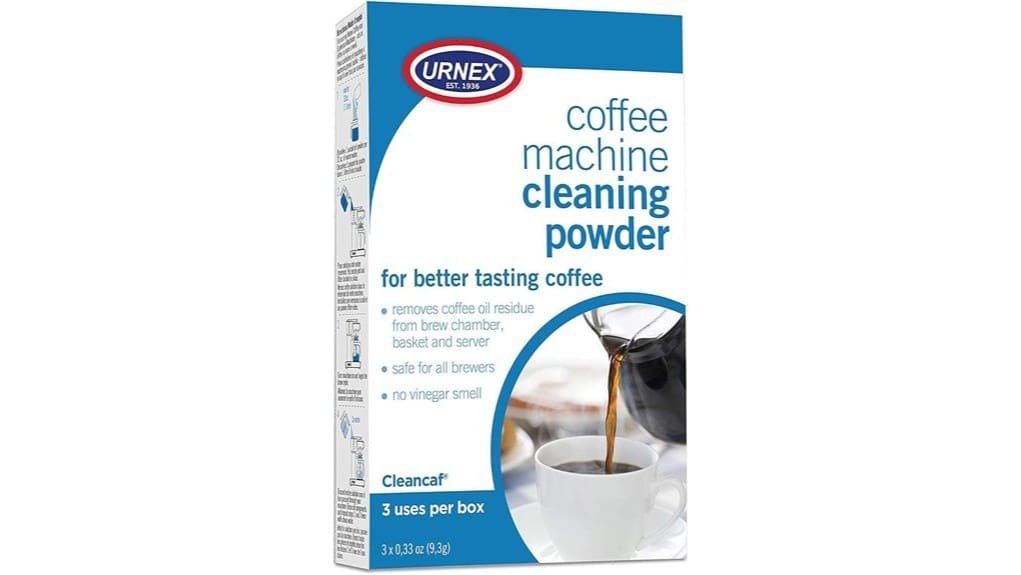
You’ll find Urnex Cleancaf is a compact, single‑dose powder that targets rancid oils and light scale in removable‑brew‑path and single‑serve machines. It uses surfactants to emulsify oils and soften thin mineral films, restoring flow and improving extraction times without vinegar odor. It’s best for routine upkeep rather than heavy calcification and works well for homes, small offices, and travel protection. Follow a single‑packet cycle and two rinses for reliable results—keep going to see use steps, comparisons, and costs.
Some Key Takeaways
- Cleancaf effectively removes rancid coffee oils and restores flow in removable-brew-path espresso and single-serve machines.
- Its surfactant blend softens and disperses light mineral films, aiding routine descaling and preventing buildup.
- Single-use packets dissolve in the reservoir for an easy cleaning cycle, followed by two fresh-water rinse cycles.
- Users report cleaner-tasting brews, faster extraction, and more consistent shot volumes after treatment.
- Not for heavy calcification; strong scale may require dedicated acidic descalers in addition.
Which Machines and Problems Is Urnex Cleancaf Best For?
While you’re maintaining a range of consumer coffee makers and home espresso machines, Urnex Cleancaf targets devices that suffer from oil buildup and light scale accumulation—Keurig, Nespresso, DeLonghi, Ninja, Hamilton Beach, Mr. Coffee. You’ll find it best for espresso machines with removable brew paths and single serve brewers that cycle hot water through confined channels. It removes rancid oils and thin mineral films that slow flow and sour flavor. You’ll appreciate odorless, measured packets that reduce dosing guesswork. Technically precise and user-focused, Cleancaf suits households and small offices seeking reliable maintenance to preserve extraction consistency and communal ritual. It’s a handy choice for beachgoers and outdoor lovers looking to protect small coffee makers from salt air corrosion when traveling to seaside destinations.
Quick Verdict: Does Cleancaf Actually Remove Oil and Limescale?
Having covered which machines benefit most from regular maintenance, let’s evaluate whether Cleancaf actually removes oil and limescale. You’ll find Cleancaf delivers measurable oil removal: its surfactant blend emulsifies residual coffee oils, restoring flow paths and preventing rancid flavors. For scale prevention, its formulation softens and disperses mineral deposits sufficiently for routine maintenance, though heavy calcification may need targeted descaling agents. In practice you’ll see faster brew times and improved extraction after use. Overall, Cleancaf is a reliable maintenance tool that addresses both oil removal and scale prevention for regular upkeep, fostering a shared standard of care.
How to Use a Single Cleancaf Packet Step-by-Step
Before you start, confirm the machine is cool and emptied of coffee grounds or pods, then dissolve one Cleancaf packet in the manufacturer-recommended water volume (usually the brew reservoir) to create the cleaning solution. Follow the pre clean checklist: remove filters, empty grounds, and position a receptacle for discharged liquid. Run a full cleaning cycle as you would brew; pause per machine instructions if required. After cycle completion, run two fresh-water rinse cycles to flush residue. Dispose of spent solution per single packet disposal guidance—it’s non-toxic but shouldn’t be poured into sensitive drains. Reassemble and resume normal use.
Real-World Results: Taste, Brew Speed, and Maintenance Experience
When you run Cleancaf as directed, you’ll notice cleaner-tasting brews, quicker extraction times, and fewer maintenance interruptions—because the powder targets both oil films and mineral scale that slow water flow and mute flavor. You’ll perceive measurable taste improvement: muted bitterness drops and aromatic notes become clearer, supporting extraction clarity. Brewing consistency improves across successive cycles; shot volumes and flow rates stabilize sooner after treatment. Maintenance convenience is high—single-use packets simplify dosing and shorten cleaning time—so you and your community of home-baristas spend more time brewing and less time troubleshooting equipment variability or rancid-oil faults.
Compare Alternatives, Price-Per-Treatment, and Where to Buy
Although Cleancaf’s single-use packets simplify dosing, you’ll want to compare alternatives on formulation, cost per treatment, and compatibility to decide the best fit for your equipment and maintenance frequency. Evaluate alkaline powder cleaners versus acidic descalers: Cleancaf targets oils and scale without vinegar odor or harsh chemicals. Do a price comparison: a three-pack yields three treatments, so compute unit cost against multi-dose tubs or tablets. Check subscription options from retailers for steady savings and timely replacements. Buy from major vendors—manufacturer site, Amazon, specialty coffee shops—to confirm authenticity and US-made claims, and match compatibility to your machine list.
Some Questions Answered
Is Cleancaf Safe for Use With Milk-Based Espresso Machines?
Yes — you can use Cleancaf with milk-based espresso machines, provided you follow instructions and rinse thoroughly. For milk safety and machine compatibility, Cleancaf’s odorless, non-toxic formula removes oils and limescale without harsh chemicals, reducing bacterial risk from residual milk films. You’ll want to run adequate rinse cycles and clean steam wands separately. That keeps your group head, lines, and milk system hygienic and preserves flavor consistency.
Can I Use Cleancaf in Pod Machines Without Voiding Warranties?
You can generally use Cleancaf in pod machines without voiding warranties, but check your manufacturer’s guidance for pod compatibility and warranty impacts. Cleancaf’s odorless, non‑toxic formula and single‑use packets match cleaning procedures most brands recommend. Still, document the process and retain packets as proof. If a maker explicitly forbids third‑party cleaners, follow their policy to protect coverage; otherwise, this cleaner is typically safe and compliant.
How Often Should I Descale if I Have Very Hard Water?
You should descale more frequent—every 1–2 months—if you have very hard water to control mineral buildup. Test hardness with a water testing strip and document ppm; adjust frequency based on results and brewing volume. Prioritize scale prevention by using filtered water, regular cleaning cycles, and single-use dosing. You’ll protect machine performance, maintain flavor, and join others who treat descaling as routine maintenance rather than an occasional chore.
Is Cleancaf Biodegradable and Environmentally Friendly?
Yes — you’re getting a biodegradable formula designed to minimize environmental impact. You’ll find Cleancaf is odorless, non-toxic, and formulated to cut oils and limescale without harsh chemicals, which reduces ecological burden compared with strong acids or solvents. You’ll appreciate its single-use packets for precise dosing, lowering waste and runoff. Overall, it’s an environmentally considerate choice for routine machine care when you want effective cleaning with reduced footprint.
Can Cleancaf Remove Odor From Long-Unused Coffee Makers?
Yes — you can remove odors from long-unused coffee makers with Cleancaf. You’ll get effective odor elimination and basic mold remediation by running its single-use packets through brewing cycles; the odorless, non-toxic formula breaks down rancid oils and biofilms that harbor smells. You’ll restore faster brewing and better flavor without harsh chemicals. Follow dosing and repeat cycles if smells persist, and you’ll rejoin other users who trust this simple, reliable process.