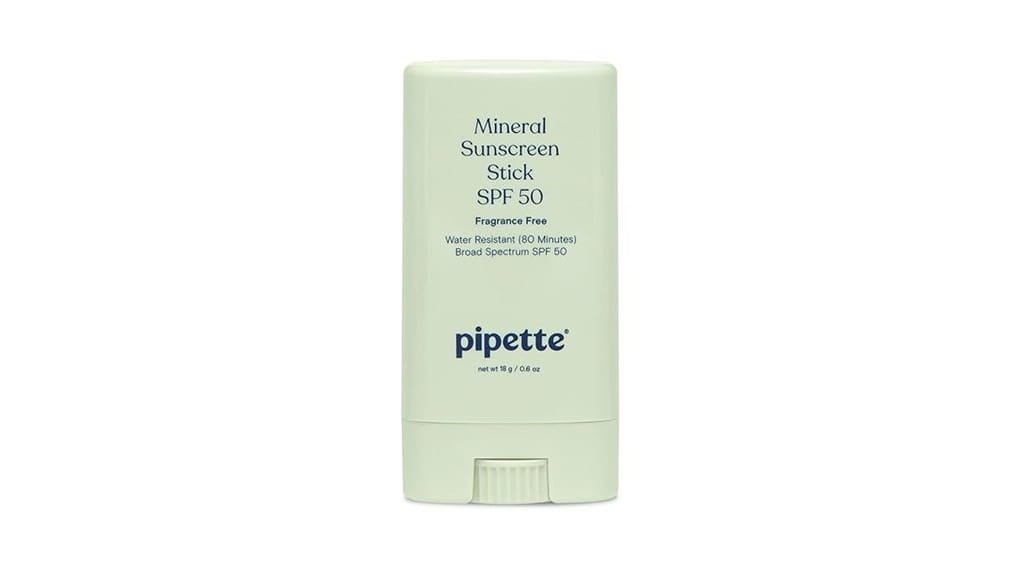
You’ll get travel‑friendly, non‑nano zinc oxide SPF 50 in a hypoallergenic stick that’s made for sensitive and pediatric skin. The solid format glides on with a sheer, low‑transfer finish for precise, mess‑free application to face and small bodies. Bisabolol calms irritation while sugarcane‑derived squalane supports barrier hydration. Dermatologist testing and Leaping Bunny certification back safety and cruelty‑free claims. It resists water for the labeled interval; keep reading if you want specifics and comparisons.
Some Key Takeaways
- Provides broad-spectrum SPF 50 protection using 100% non‑nano zinc oxide, ideal for sensitive baby skin.
- Hypoallergenic, dermatologist‑tested, fragrance‑free formula with bisabolol to soothe and reduce irritation.
- Compact stick glides on sheer with minimal white cast, precise application, and less transfer than creams.
- Contains sugarcane-derived squalane for lightweight hydration and improved skin barrier after sun exposure.
- Water‑resistant for the labeled interval, best to reapply after towel drying, swimming, or heavy activity.
How the Pipette Baby Mineral Sunscreen Stick SPF 50 Performs on Kids and Sensitive Skin
Because it’s formulated with 100% non‑nano zinc oxide and tested for sensitive skin, the Pipette Baby Mineral Sunscreen Stick SPF 50 delivers reliable broad‑spectrum protection for kids and those with reactive skin. You’ll find the hypoallergenic formula minimizes irritation; dermatology testing and calming bisabolol support tolerance on delicate skin. The stick format encourages consistent, gentle reapplication and controlled dosing, which reduces missed spots. Moisturizing squalane sustains barrier function after exposure. You and your caregiving community will appreciate travel-size convenience and clinical safety claims. Expect reduced transfer risk to stain free clothing versus creamier sunscreens, enhancing practicality for group outings. It’s a compact, beach-friendly option that supports sun-safe essentials for outdoor activities.
Application, Texture, and Real-World Water Resistance
When you swipe the Pipette Baby Mineral Sunscreen Stick SPF 50 across skin, the solid formula glides on smoothly and absorbs quickly into a sheer, non-greasy finish that lets you see coverage without a heavy white cast; the stick design gives precise, mess‑free application on faces, necks, and small bodies so caregivers can dose consistently. For application tips, press firmly for even layers, target temples and hairlines, and overlap strokes to avoid gaps. Texture comparison with creams shows faster absorption and less transfer. In water, the formulation maintains adherence for the labeled resistance interval; reapply after towel drying or heavy activity to preserve protection. This compact format is especially handy for beach lovers who need quick, on-the-go reapplication.
Ingredients That Matter: Zinc Oxide, Squalane, and Calming Bisabolol
Although mineral sunscreens can feel chalky, Pipette’s use of 100% non‑nano zinc oxide delivers broad-spectrum UVA/UVB protection while minimizing systemic absorption concerns associated with chemical filters. You get physical barrier efficacy; zinc oxide also stabilizes other ingredients, producing zinc synergy that supports durable coverage. Sugarcane-derived squalane provides lightweight emollience and restores barrier lipids—squalane benefits include rapid absorption and reduced transepidermal water loss. Bisabolol adds clinically supported anti‑inflammatory and anti‑irritant activity, calming reactive skin after sun exposure. Together these actives create a simple, evidence-driven formulation that respects sensitive skin needs and fosters shared confidence in everyday sun care. Ideal for beach lovers, the formula is designed for easy application and reapplication to support beach-ready sun protection.
Safety, Testing, and Formulation Claims Explained (Non-Nano, Hypoallergenic, Cruelty-Free)
The ingredient choices above set the stage for how the product is tested and labeled, but you’ll want to understand what terms like “non‑nano,” “hypoallergenic,” and “cruelty‑free” actually mean in practice. Pipette uses non‑nano zinc oxide; that addresses the non nano debate by avoiding particles small enough to penetrate skin, aligning with current safety guidance. Hypoallergenic and dermatologist‑tested indicate reduced irritancy risk, supported by ingredient omissions and controlled patch testing. Cruelty free verification comes from Leaping Bunny certification, providing third‑party auditing rather than brand claims alone. You’ll get transparent, evidence‑based assurances for sensitive skin use. Our site focuses on reef‑safe sunscreen options for beach lovers, highlighting products that protect both people and coral reefs with reef-safe choices.
Who Should Buy This Stick : and How It Compares to Other Travel Sunscreens
Think of this stick as a grab-and-go option for parents and anyone with sensitive or reactive skin who needs reliable, travel-sized mineral protection. You’ll buy it if you prioritize non-nano zinc oxide, dermatologically tested formulas, and compact Travel essentials that fit diaper bags and carry-ons. Parent preferences for hypoallergenic, fragrance-free, water-resistant protection align here. Compared to other travel sunscreens, the stick offers mess-free application, targeted coverage, and squalane for hydration, while liquid sprays may miss spots and chemical filters can irritate reactive skin. Choose this when convenience, safety data, and family-focused formulation matter. It’s a strong choice for beach-goers who want sun-safe options geared specifically toward kids and outdoor play.
Some Questions Answered
Can This Stick Be Used on Newborns Under 6 Months?
You shouldn’t use this on newborns under 6 months; pediatric guidance recommends avoiding sunscreen on infants that young when possible. You should keep newborn safety first by using shade, protective clothing, and limiting sun exposure. If unavoidable, consult your pediatrician for tailored advice—especially for sensitive skin. You’ll find mineral formulas are generally preferred, but a clinician’s recommendation guarantees the safest approach for your baby and family.
Is the Stick Safe to Use Around the Eyes and Mouth?
Yes — you can apply the stick near eyes and mouth, but avoid direct contact with eyelids and lips to minimize irritation risk. Its non‑nano zinc oxide, bisabolol and squalane reduce sensitivity, yet you should test a small area first. If stinging, redness, or tearing occurs, stop use and rinse. Reapply per guidelines and consult a pediatrician for infants or persistent reactions to guarantee safe application practices.
How Many Applications per Stick on an Average Toddler?
You’ll get roughly 10–15 full-face applications per 0.6 oz stick on an average toddler. That estimate assumes you apply a thin, even layer and follow daily reapplication guidance (every 2 hours and after water exposure). Travel convenience lets you top up easily between activities; still, plan for more than one stick for multi-day trips or heavy swimming. You’ll feel reassured knowing coverage and frequency matter for protection.
Does the Sunscreen Leave White Cast on Darker Skin Tones?
You’ll usually see minimal white cast; the non-nano zinc oxide blends sheer on many tones but may appear slightly visible on deeper skin. Clinical testing and calming, moisturizing ingredients help with rub-in and skin tone match, yet some individuals with darker complexions might notice a faint residue. You’ll want to patch-test first and apply thin, even layers, reapplying per instructions to maintain protection without compromising comfort or inclusion.
What Is the Product’s Shelf Life After Opening?
The product’s shelf life after opening is typically 12 months; check the PAO symbol for the exact expiration timeframe. You’ll want to store it in cool, dry storage conditions away from direct sunlight and extreme heat to preserve zinc oxide stability and ingredient efficacy. Follow manufacturer guidance and discard if texture, scent, or color changes. This keeps your family safe and included in consistent, evidence-based sun protection routines.