You’ll want breathable, waterproof mesh uppers with insulating padding and a flexible midsole to block radiant heat while preserving gait. Measure paw width with weight on the paw, check both front and rear, and pick the larger size if you fall between sizes. Look for anti‑slip textured rubber soles, secure closures, and clear sizing charts for consistent fit. Expect short supervised break‑in sessions and weekly inspections; continue for detailed fit, care, and replacement guidance.
Some Key Takeaways
- Measure paw width with weight on the paw and choose larger size if between sizes to ensure secure, protective fit on hot pavement.
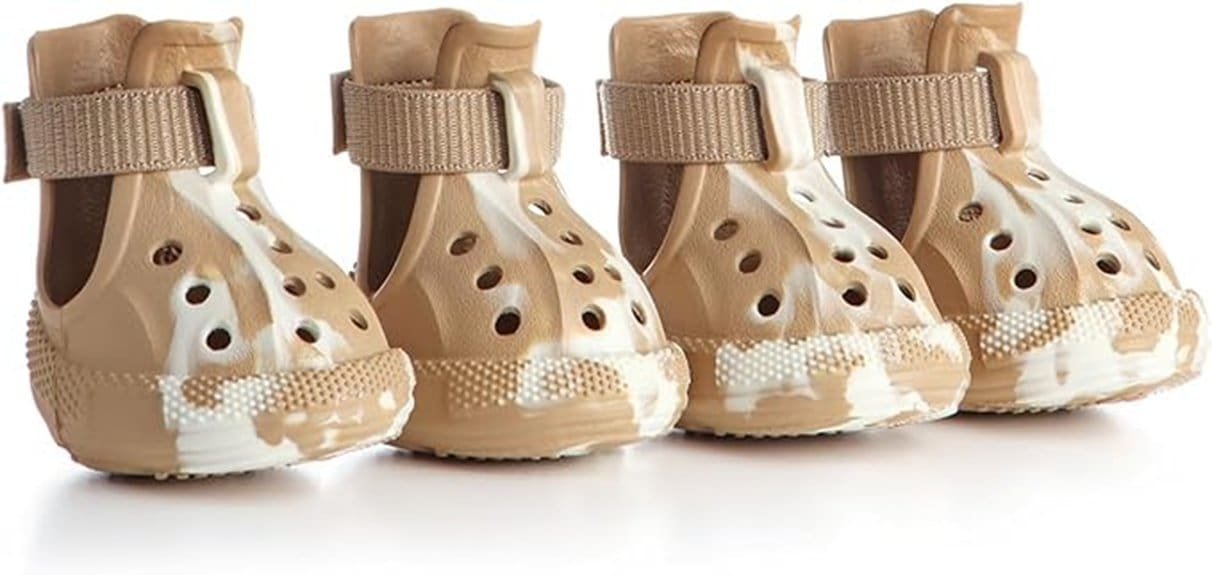
- Look for waterproof, breathable mesh uppers with insulating padding and ventilated panels to block radiant heat and promote airflow.
- Prioritize anti-slip textured rubber outsoles with rugged tread to disperse heat and maintain traction on hot surfaces.
- Break in shoes with 10–30 minute supervised sessions, monitoring hesitation or licking and adjusting fit as needed.
- Rinse and air-dry after outings, inspect tread and seams weekly, and replace when waterproofing fails or tread wears beyond 2–3 mm.
Best Dog Shoes for Hot Summer Pavement: Top Picks and Quick Verdicts
Frequently, choosing the right dog shoes for hot pavement comes down to measured fit and functional protection: start by measuring your dog’s paw width (Size 1 = 1.181 in for 4–10 lbs as a reference), then select waterproof, quick-drying shoes with ventilated, lightweight construction and rugged anti-slip soles. You’ll prioritize breathable mesh panels for airflow and reflective trim for low-light visibility. Pick shoes that match measured width, expect an adjustment period, and favor easy-clean materials. You’ll value brands with clear sizing charts and evidence of secure closures; that clarity helps you and your dog feel confidently included. Also consider pairing shoes with a lightweight beach towel to dry paws and provide a cool resting spot after walks.
How These Dog Shoes Protect Paws on Hot Pavement (Materials and Traction)
Having measured your dog’s paw and selected a properly sized shoe, you can evaluate how the construction and outsole design protect paws on hot pavement. The upper uses waterproof mesh layered over insulating padding to block radiant heat while allowing airflow; materials are quick-drying and resist debris. A lightweight, flexible midsole preserves natural gait and reduces pressure points. Anti slip soles employ textured rubber and a rugged tread pattern to disperse heat contact and maintain traction on warm, uneven surfaces. Together these features shield pads from thermal injury, improve stability, and promote confidence for you and your dog outdoors. For beach and outdoor excursions, pairing these shoes with a dog life jacket enhances safety when near water.
How to Measure and Choose the Right Size for Your 4–10 Lb Dog
When fitting dog shoes for a 4–10 lb dog, start by measuring the paw width at the widest point while the dog’s weight is on the paw to replicate natural splay; size 1 corresponds to 1.181 inches and is designed for this weight range, but paw width should be the primary criterion. Use a flexible tape to record width and paw circumference; measure both front and rear paws. Allow a small width tolerance (typically 1–2 mm) to avoid constriction. If measurements fall between sizes, choose the larger for comfort. Reassure owners: consistent, precise measurement yields better fit and shared confidence. For beach and sunny outings, consider a lightweight, breathable tent to give pets shade and rest during breaks Beach-Ready Pet Tents.
Real-World Fit, Comfort, and Durability: What to Expect During the Adjustment Period
Although your dog may resist initially, most small breeds adapt to size 1 dog shoes within several short sessions of supervised wear. You’ll observe breaking in over 10–30 minutes per session: gait normalizes, paw placement centers, and weight distribution stabilizes. Monitor behavioral cues—hesitation, excessive licking, or shaking—and adjust fit if present. The ventilated, lightweight construction promotes temperature tolerance while preventing stuffiness. Expect minimal abrasion on rugged anti-slip soles after routine outdoor use; rubbing points show first wear. Match shoe size and style preferences to activity to encourage consistent use. Share experiences with other owners to refine fit and confidence. Consider pairing dog shoes with a beach-ready leash when heading to coastal or outdoor adventures to keep your pup safe and secure.
Care, Cleaning, and When to Replace Dog Shoes for Summer Use
Cleaning and inspecting your dog’s shoes after each outing preserves waterproofing and prevents odor buildup, so rinse them with water and let them air-dry fully before storage. You’ll adopt a simple cleaning routine: remove debris, flush soles, and wipe liners; disinfect weekly if exposure to contaminants occurred. Verify seams, fasteners, and tread wear each week; document changes to establish a replacement timeline. Replace shoes when waterproofing fails, soles thin beyond 2–3 mm of tread loss, or fit shifts despite correct sizing. Following these steps maintains protection, preserves lightweight function, and keeps your dog included in summer outings. Consider choosing designs with accessible features to ensure comfort and ease of use for people assisting pets at the beach.
Some Questions Answered
Can Dogs Pee While Wearing These Shoes?
Yes — your dog can pee while wearing these shoes, though potty logistics need planning. You’ll remove or pull back a shoe if it blocks contact; many dogs lift a leg and avoid soiling due to quick-drying, waterproof material. Schedule hydration breaks so they don’t strain. Expect an adjustment period; monitor for discomfort. Evidence-based practice: measure fit precisely and observe gait to make certain elimination isn’t impeded.
Are These Shoes Safe for Dogs With Allergies?
Yes — they’re generally safe for dogs with allergies when you check for material sensitivity first. The waterproof, quick-drying fabric limits seasonal allergens clinging to paws, and ventilation reduces trapped moisture that can worsen reactions. Measure paws for proper fit to avoid chafing during the adjustment period. Rinse shoes after outdoor use to remove pollen or irritants. If your dog has severe allergies, consult your veterinarian before prolonged wear.
Do Dog Shoes Affect Canine Paw Scent Marking?
They can reduce scent interference, but won’t eliminate marking behavior. You’ll likely notice diminished paw-deposited odor because waterproof, quick-drying materials and soles limit direct gland contact with surfaces. That can lower chemical transfer while still allowing visual and posture-based signals. Expect some behavioral adjustment; dogs may sniff more or shift marking sites. Measure fit accurately and allow an adjustment period to support confident, inclusive outdoor interactions.
Can Shoes Be Worn Overnight or During Sleep?
No, you shouldn’t routinely leave shoes on overnight. For paw protection during short outings they’re effective, but prolonged wear can increase moisture, pressure points, and skin irritation that reduce sleep comfort. Evidence-based practice: remove footwear before extended rest, dry paws, and inspect for chafing. If your dog tolerates them briefly during recovery, monitor closely and prioritize breathable, lightweight options while fostering shared routines that reinforce your bond and safety.
Are Replacement Straps or Parts Available Separately?
Yes — replacement straps and spare soles are available separately from most vendors. You’ll find compatible replacement straps and spare soles sold as parts or repair kits; measure your dog’s paw width to confirm fit. Evidence shows replacing worn components restores waterproofing, traction, and fit faster than full replacement. You’ll join other owners who prefer sustainable repairs, and you’ll maintain protection during hot pavement, rain, or beach outings.