You’ll want shoes that fit precisely, so trace your pup’s paw flat, measure width and length, and pick the larger size if you’re between measurements. Choose soft, breathable fabrics to prevent overheating and rotate pairs to extend life. Look for lightweight yet grippy soles for everyday walks and thicker tread for ice or rough terrain. Use adjustable straps that’re snug but not tight, check gait after fastening, and clean and air-dry regularly — keep going to see specific recommendations and sizing tips.
Some Key Takeaways
- Choose the correct size by tracing each paw flat, measuring width and length, and selecting the larger size if between charts.
- Prioritize soft, breathable fabrics to prevent overheating and allow natural paw airflow during wear.
- Select sole thickness based on terrain: lightweight for natural movement, grippy/thicker for ice, rough surfaces, or hot pavement.
- Use adjustable, snug (not tight) straps and check paw splay and gait after fastening to ensure comfortable fit.
- Clean and rotate pairs regularly, air-dry away from heat, and replace shoes when soles crack or fabric thins.
Best Small Dog Shoe Features to Look For (Fit, Material, Traction, and Fastening)
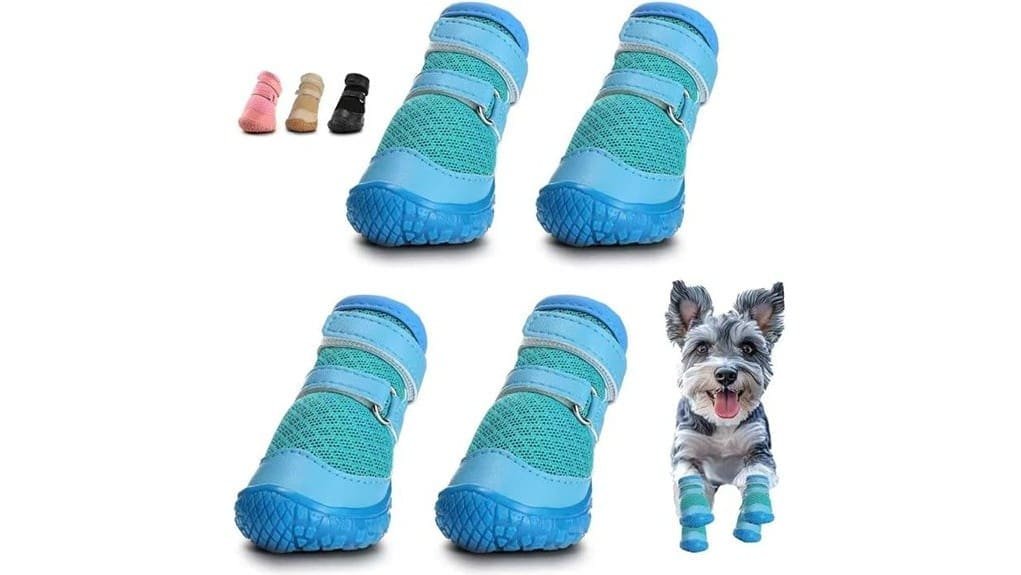
When choosing small dog shoes, focus first on fit: pick the size that matches your pet’s paw width (Size 1 = 1.10″ for 2.2–6.6 lbs, Size 2 = 1.29″ for 6.6–11.0 lbs, Size 3 = 1.49″ for 11–16.5 lbs) and confirm with the picture size chart; a snug, not tight, fit prevents slipping and chafing. You’ll want soft, breathable materials that avoid overheating and protect from pavement, ice, and debris. Look for reliable traction, adjustable straps, and easy on/off design. Choose lightweight soles and reflective trims so your small dog stays safe, comfortable, and part of your active life. Consider pairing dog shoes with a beach walking stick to help steady your balance on sand and rough coastal terrain.
How to Measure Your Small Dog’s Paw and Choose the Correct Size
Now that you know what features matter in small dog shoes, the next step is measuring your pup’s paw so you pick the correct size. Sit with your dog relaxed, place a sheet of paper under the paw, and do a paw tracing while the paw is flat and weight-bearing. Mark widest points and heel, then measure width and length with a ruler. Use this measurement technique to match the size chart—compare width to Size 1–3 ranges and refer to the picture size chart. If between sizes, choose the larger for comfort. Repeat for all paws; fit can vary by paw and season. Consider also drying your dog’s paws thoroughly after beach outings to protect the shoes and paw health, especially when using sand-friendly towels.
Top Use Cases: When to Use Dog Shoes and Which Styles Work Best
Although small dog shoes are compact, they serve many specific purposes and can make a big difference in your pet’s comfort and safety. Use soft, breathable boots for seasonal outings—hot pavement, snow, or rain—and choose thicker, grippy soles for icy or rough terrain. For urban walks pick lightweight, flexible styles with anti-slip tread to protect against glass and hot sidewalks. Wraparound straps and easy closures help you fit shoes quickly before walks or vet visits. For wound protection and indoor wear, select breathable options that prevent chewing while keeping paws safe and letting your dog stay part of your life. Consider pairing shoes with a properly fitted dog life jacket when visiting beaches or boating to keep your pup safe and stylish.
Real-World Fit and Comfort Checklist: Putting Shoes On, Adjusting Straps, and Preventing Overheating
Because a proper fit makes the difference between protective comfort and a fussy pup, start by measuring your dog’s paw width against the size chart and pick the closest size (Size 1 = 1.10″, Size 2 = 1.29″, Size 3 = 1.49″). Once chosen, practice easy application: let your dog sniff shoes, slide one on gently, fasten straps snugly but not tight. Check gait and paw splay for natural movement. Perform a breathability check—feel inside for heat, inspect material for airflow. Limit initial wear to short walks, watch for rubbing, adjust straps as needed, and celebrate progress together. Consider selecting materials designed for accessible outdoor use to ensure durability and comfort for beach trips.
Caring for and Maintaining Small Dog Shoes for Long-Term Use
Regularly inspecting and cleaning your small dog’s shoes will extend their life and keep your pup comfortable, so set a simple routine after every outdoor use: brush off loose dirt, rinse mud or salt with cool water, and air-dry them away from direct heat. Check straps, seams, and soles for wear; replace shoes when fabric thins or soles crack. Spot-clean breathable materials with mild soap to preserve comfort and prevent overheating. Rotate pairs to reduce wear, and store shoes in a ventilated bin or mesh bag. Follow cleaning routines and storage tips to protect investment and keep your dog safe. Consider keeping a dedicated beach-ready pet carrier on hand to transport shoes and gear for sunny outdoor adventures.
Some Questions Answered
Do Dog Shoes Affect My Dog’s Gait Long-Term?
Short-term gait adaptation is common, but properly fitted shoes usually won’t harm joint alignment long-term. You’ll want to make certain sizes match your dog’s paw and straps are snug yet comfortable so they walk naturally. Monitor their steps during hikes and gradual wear to avoid compensations. If you notice persistent limping, uneven stride, or stiffness, stop use and consult your vet or a canine physiotherapist to protect joints and maintain confident movement.
Can Shoes Be Worn Overnight or During Sleep?
You shouldn’t regularly leave shoes on overnight; they can compromise overnight comfort and increase sleep disruption. Use them short-term for wound protection or if a vet advises; make certain breathable materials, proper fit, and check paws often. Remove straps if you see chewing or redness, and offer calming routines so your dog feels safe. You’ll help them rest without irritation while still protecting paws when truly necessary.
Are These Shoes Safe for Puppies With Growing Paws?
Yes — they can be safe for puppies if you monitor fit closely and check material flexibility. You’ll want to make certain straps aren’t too tight, leave room for growth, and remeasure often using the size guide. The soft, breathable material helps avoid overheating while supporting injured paws. You’ll fit-monitor during play and rest, adjust as needed, and join other caring owners keeping their pups comfortable and protected as they grow.
Can I Use Shoes for Water Activities Like Swimming?
Yes — you can use waterproof variants for water play, but check if the pair offers buoyant designs before diving in. You’ll want seals that keep water out, quick-draining materials, and adjustable straps so shoes stay put during swims. If shoes float, supervise at all times and practice short sessions to build your dog’s confidence. You’ll join a community of owners helping pets enjoy water safely and comfortably.
Do Dog Shoes Interfere With Paw Temperature Sensing?
No — properly fitted dog shoes won’t markedly block paw thermoception; they offer light sensory insulation while still letting your dog sense temperature changes. You’ll want breathable, soft materials and adjustable straps so the shoes stay secure without over-insulating. Monitor your dog’s behavior during first uses and choose thinner soles for warmer conditions or insulated ones for cold. You’re protecting paws while keeping your pet connected to their environment. Dog shoes for summer protection are essential for preventing paw burns on hot pavement. Look for options that have non-slip soles for better traction during those warm walks. Additionally, ensure the shoes are lightweight to keep your dog comfortable during outdoor adventures.